Growth Mindset Workbook
What if the biggest barrier to your growth wasn’t time, talent, or resources—but the quiet voice inside saying “I’m just not built for this”? The Growth Mindset Workbook isn’t another abstract self-help guide. It’s an 8.5 x 11 inch guided resource designed with intention—blending cognitive science, emotional intelligence research, and real-world usability. Whether you're launching a side hustle, navigating career transitions, supporting students, or simply rebuilding confidence after setbacks, this workbook meets you where you are—not with platitudes, but with structured reflection, actionable reframing tools, and progress-tracking that actually sticks.
Why people reach for this workbook—and why some miss its full value
Many adults aged 20–50 pick up the Growth Mindset Workbook hoping for quick confidence boosts or motivational quotes. That’s understandable—but it’s also where the first misstep begins. Confidence isn’t built in bursts; it’s cultivated through consistent, low-stakes practice. The workbook works best when treated as a *practice tool*, not a passive read. People who skim exercises or skip journaling prompts often report “it didn’t click”—not because the content lacks depth, but because mindset shifts require engagement, not observation.
Another common oversight? Assuming it’s only for beginners. In reality, seasoned professionals, educators, and entrepreneurs benefit deeply from its layered structure: early sections reinforce foundational awareness (e.g., spotting fixed-mindset language), while later pages introduce advanced techniques like values-aligned goal reframing and resilience mapping—tools rarely found in generic mindset resources.
Mistakes that quietly undermine results
1. Using it only during “crisis moments.” Waiting until burnout, rejection, or failure hits before opening the workbook is like trying to learn CPR mid-emergency. Growth mindset isn’t reactive—it’s preventative maintenance. One freelance designer we spoke with started using the daily affirmation + reflection page every Monday morning—even on calm weeks. Within six weeks, she noticed fewer spirals after client feedback and quicker recovery from creative blocks. Consistency builds neural pathways; urgency rarely does.
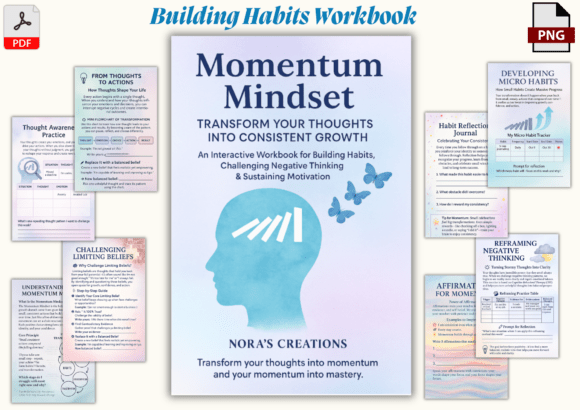
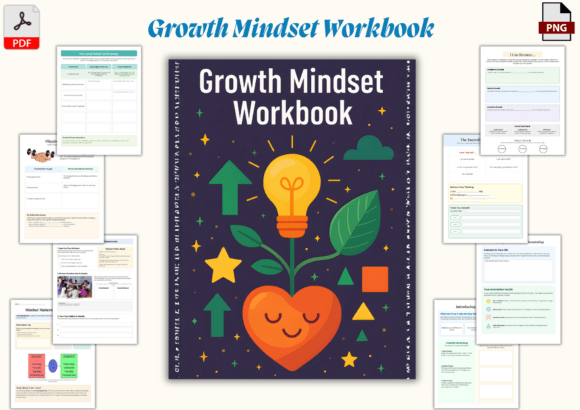
2. Printing without checking format compatibility. The Growth Mindset Workbook comes in both PDF and PNG formats—each serving distinct needs. PDF preserves interactive fields (like clickable checkboxes and fillable journal spaces) and scales cleanly across devices. PNG files are ideal for digital annotation in apps like GoodNotes or Notability, but they don’t support typing directly into fields. A small business owner once printed the PNG version expecting editable worksheets—only to realize too late she’d need to handwrite everything. Before downloading, ask yourself: Do I prefer typing my reflections, or do I enjoy handwriting? Then choose the format that matches your workflow—not just what looks prettier in your inbox.
3. Overlooking the design logic behind the layout. At first glance, the clean visuals and motivational illustrations may seem purely aesthetic. But they serve a functional purpose: reducing cognitive load. Research shows that well-spaced text, intentional color cues, and visual anchors improve retention and reduce abandonment—especially for busy adults juggling multiple roles. Skipping pages because “they look too simple” means missing out on carefully sequenced scaffolding. For example, the “Reframe This Thought” exercise on page 23 doesn’t stand alone—it builds directly on the self-talk audit from page 14. Jumping ahead fractures the learning arc.
What to check before you begin—or buy
If you’re evaluating whether this workbook fits your goals, pause and consider three practical checkpoints:
- Your current challenge type. Is it skill-related (e.g., learning public speaking), identity-based (e.g., “I’m not a math person”), or situational (e.g., managing team conflict)? The Growth Mindset Workbook includes targeted scenarios for each—but its strength lies in bridging them. If your struggle involves shifting deep-seated beliefs *and* building new habits, this resource aligns well. If you need hyper-specialized tactical training (e.g., SEO algorithms or tax law), look elsewhere.
- Your preferred learning rhythm. Do you thrive with short, daily 5–10 minute practices—or do you prefer deeper weekly dives? The workbook supports both, thanks to modular sections and clear time estimates per activity. Check the table of contents for flexibility—not just topic coverage.
- Your environment. Are you using it solo, with a coach, in a classroom, or with a team? Educators tell us the reflection pages spark rich discussion when used in small groups; freelancers appreciate the “Progress Pulse” tracker for quarterly reviews. Make sure the format (digital vs. print) and structure suit how and where you’ll actually engage with it.
Better approaches—grounded in real use
Instead of treating the Growth Mindset Workbook as a linear textbook, try this: Start with *one* recurring challenge—say, avoiding difficult conversations at work. Flip to the “Real-Life Scenario” section on communication, complete just the “Before & After Thought Map,” then sit with the reframed version for two days before moving on. Small, anchored experiments build credibility faster than completing ten pages without connection to lived experience.
Also worth noting: The workbook was designed by Nora’s Creations with input from school counselors, life coaches, and adult learners—not marketing teams chasing trends. That shows in subtle ways: affirmations avoid vague positivity (“You’re amazing!”) and instead focus on effort, strategy, and growth evidence (“I noticed how I adjusted my approach after the last presentation—that’s resilience in action”). These distinctions matter when building authentic self-belief.
Finally, remember that mindset work isn’t about erasing doubt—it’s about expanding your response repertoire. The Growth Mindset Workbook gives you language, space, and structure to name what’s hard, examine it without judgment, and choose your next step—not from certainty, but from curiosity and care. That kind of grounded confidence doesn’t shout. It steadies. And it grows—not all at once, but page by thoughtful page.