2026 Self-Improvement Workbook: A Practical Guide for Intentional Growth
The 2026 Self-Improvement Workbook is a 120-page guided resource designed to support structured, reflective personal development over the course of a year. Unlike generic planners or digital habit apps, it combines intentional scaffolding—like SMART goal frameworks and life-area audits—with flexible, editable components (12 Canva pages) and physical usability (bleed format for printing). It’s built for people who want clarity without rigidity, accountability without overwhelm, and reflection that leads to action—not just journaling for its own sake.
How It Stands Apart From Other Planning Tools
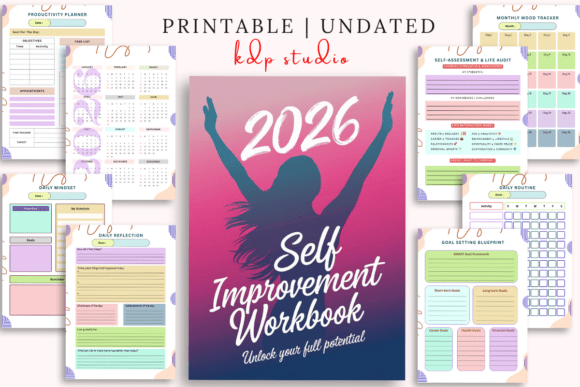
Many self-improvement resources fall into one of two categories: highly structured systems that demand strict adherence (think rigid habit streaks or daily point-based scoring), or open-ended journals that offer freedom but little direction. The 2026 Self-Improvement Workbook occupies a middle ground. Its yearly calendar, life audit, and goal-setting blueprint provide scaffolding at the macro level—helping users align actions with values across career, health, and finances. Meanwhile, the daily mindset page, routine planner, and self-care checklist support micro-level consistency without prescribing exact times or frequencies.
This balance makes it especially useful for adults whose schedules shift unpredictably—freelancers, caregivers, or those in transition—because it doesn’t assume a fixed 9-to-5 rhythm. For example, someone returning to school while working part-time can use the life audit to identify where energy is leaking, then adjust their weekly habit tracker accordingly—not by deleting habits, but by rotating focus across months.
Key Components and Their Real-World Utility
Each section serves a distinct function, grounded in behavioral research and practical experience:
- Self-Assessment Life Audit: A structured way to evaluate satisfaction—not just performance—in areas like relationships, personal growth, and environment. Unlike vague “rate your happiness” prompts, this asks specific questions about time spent, emotional resonance, and alignment with long-term values. It surfaces mismatches early—e.g., realizing you’re spending 20 hours/week on a hobby that no longer energizes you.
- SMART Goal Blueprint: Goes beyond writing goals down. It guides users through specificity (“What does ‘better fitness’ actually mean?”), measurability (“How will I track progress without scale obsession?”), and review timing. This helps avoid common pitfalls like setting vague intentions (“be healthier”) or skipping mid-year adjustments.
- Habit Tracker & Daily Routine Planner: Designed for sustainability, not perfection. The weekly layout allows for realistic pacing—tracking three core habits instead of ten—and includes space to note context (e.g., “Skipped yoga Tuesday—travel day”). Paired with the routine planner, it encourages time-blocking that honors rest as non-negotiable, not an afterthought.
- Daily Mindset Page: Focuses on intention-setting rather than to-do completion. Prompts like “What would make today feel meaningful?” or “Where can I practice patience?” invite cognitive reframing before tasks begin—supporting emotional regulation alongside productivity.
When the 2026 Self-Improvement Workbook Fits—and When It Might Not
This workbook works best for people who value reflection as a tool for change, not just documentation. It suits those who’ve tried apps like Habitica or Notion templates but found them either too fragmented (jumping between dashboards) or too inflexible (requiring daily login or data entry). Because it’s printable and offline-first, it reduces screen fatigue—a real consideration for knowledge workers already spending 6+ hours daily on devices.
However, it’s less ideal for users who need real-time syncing, reminders, or analytics. If you rely on automatic streak tracking, integration with Google Calendar, or AI-generated insights from your journal entries, a digital solution may better match your workflow—even if it sacrifices some depth of reflection. Similarly, those who prefer minimalism or resist any form of structure may find the guided prompts restrictive at first. The workbook assumes willingness to engage with prompts—not just fill blanks—but offers enough white space and editable Canva pages to adapt tone and emphasis over time.
Comparison With Common Alternatives
Compared to traditional bullet journals, the 2026 Self-Improvement Workbook provides more consistent framing across months—no need to redesign layouts each quarter or decide what metrics matter most. Yet it retains customization: the editable Canva pages let users add sections for creative projects, debt payoff timelines, or parenting goals that standard spreadsheets don’t accommodate.
Against digital planners, it avoids subscription fees and platform dependency. You own the file, print what you need, and keep notes private without cloud backups or third-party access. That said, it lacks searchability and auto-calculation—so if you’re tracking complex metrics (e.g., net calorie balance across meals and workouts), spreadsheets or dedicated health apps remain more efficient.
Unlike therapy workbooks or clinical CBT journals, this isn’t designed for trauma processing or mental health diagnosis. It assumes baseline emotional stability and focuses on growth-oriented behavior change—not crisis intervention. Readers managing anxiety, depression, or significant life disruption may benefit more from clinician-guided tools or integrated care plans.
Practical Integration Tips
To get the most from the 2026 Self-Improvement Workbook, consider how you’ll use it—not just whether you’ll buy it. Start small: dedicate 10 minutes weekly to reviewing the life audit and adjusting one habit. Use the editable Canva pages to add a “learning log” if you’re upskilling, or a “gratitude anchor” section if mood regulation is a priority. Print only the pages you’ll use in the coming month to reduce visual clutter.
Also consider pairing it with low-tech accountability: share your quarterly goal summary with a trusted friend, or post your self-care checklist on the fridge—not to perform, but to reinforce visibility. The workbook supports consistency, but consistency grows from repeated, gentle engagement—not flawless execution.
Who Benefits Most—and Who Might Look Elsewhere
The 2026 Self-Improvement Workbook is especially well-suited for:
- Adults aged 28–45 navigating career pivots, caregiving shifts, or lifestyle resets;
- Self-directed learners who want structure without surrendering autonomy;
- People who’ve outgrown basic habit trackers and seek deeper alignment between daily choices and long-term identity;
- Those preferring tactile engagement—writing by hand improves memory encoding and slows cognitive pace, supporting more thoughtful responses.
It’s less suited for:
- Users needing immediate feedback loops (e.g., instant habit confirmation, progress graphs);
- Teams or couples looking for shared dashboards or collaborative editing;
- Individuals who consistently abandon paper-based systems after two weeks—unless they pair it with a short onboarding ritual (e.g., Sunday evening tea + 5-minute planning);
- Readers seeking evidence-based clinical interventions for diagnosed conditions.
Ultimately, the 2026 Self-Improvement Workbook isn’t about fixing yourself—it’s about creating space to notice, choose, and iterate. Its strength lies in quiet consistency: helping you ask better questions, recognize patterns without judgment, and build confidence through small, witnessed acts of follow-through. Whether it’s the right tool depends less on perfection and more on whether its rhythm matches yours—right now, not someday.