2026 Yoga Practice Journal
Imagine starting each day not with a rush to check emails, but with a quiet moment—pen in hand, breath steady, intention clear—recording how your body moved, how your mind settled, and what small truth you noticed about yourself. That’s the grounded rhythm the 2026 Yoga Practice Journal invites you into. It’s not just another planner. It’s a thoughtfully structured companion for anyone who practices yoga not as performance, but as presence.
Whether you’re guiding students through sun salutations at sunrise, squeezing in 15 minutes of restorative poses between client calls, or teaching mindfulness to teens in a high school wellness elective, this journal meets you where you are—with clarity, warmth, and zero judgment. Its design doesn’t shout. It breathes. And that makes all the difference when consistency is hard-won and motivation often flickers.
A Tool Built for Real Life—Not Just Idealized Routines
The 2026 Yoga Practice Journal works because it respects how people actually live. You won’t find rigid templates demanding hour-long sessions or flawless discipline. Instead, you’ll discover flexible, intuitive pages that adapt to your pace: a 7-minute breathwork log after a stressful meeting, a two-pose reflection before bed, or a full sequence noted mid-week for future class planning.
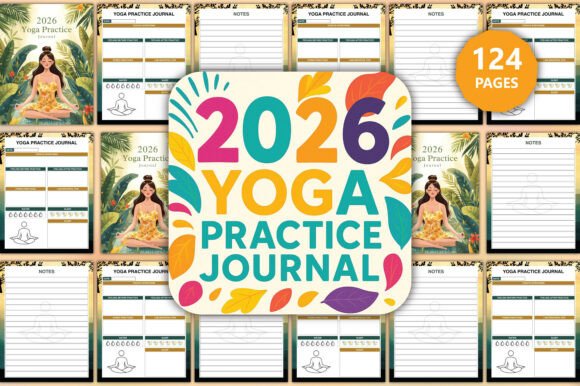
Its Daily Yoga Log captures more than just asanas—it asks how energy flowed, where tension lingered, and what shifted emotionally. That subtle layer transforms routine tracking into embodied self-study. Likewise, the Mindfulness Mood Tracker isn’t a generic emoji grid. It pairs emotional states with physical cues (e.g., “tired + tight shoulders” or “calm + open chest”), helping users recognize patterns across weeks—not just days.
More Than Personal Practice—A Professional Asset
For yoga instructors and wellness coaches, the 2026 Yoga Practice Journal doubles as a low-lift curriculum tool. The Yoga Pose Library section lets you annotate modifications, contraindications, and teaching cues next to your favorite asanas—ideal for crafting accessible sequences or preparing for teacher training mentorship. Monthly Goal Intention Setting Pages support both personal growth and student-facing objectives, like “integrate three new pranayama techniques into group classes by March.”
Educators use it to model reflective practice for students—especially in health, PE, or SEL programs. A middle school counselor might adapt the gratitude prompts for journaling circles; a university professor could assign weekly reflection entries as part of a stress-management module. Because the PDF files are upload-ready and the Canva link is fully editable, customizing pages for classroom handouts or workshop takeaways takes under five minutes.
Creative professionals—freelance designers, content creators, writers—appreciate how seamlessly it bridges inner work and output. One podcast host told us she uses the Meditation Breathing Logs to map mental clarity against recording sessions: “When my pranayama consistency goes up, episode editing time drops by 30%. This journal helped me see that link—and honor it.”
Design That Supports, Not Distracts
You’ll notice the aesthetic immediately: soft earth tones, generous white space, and gentle botanical accents—not loud graphics or forced “zen” clichés. That intentionality extends to function. The Hydration Wellness Tracker, for example, sits beside the daily log—not buried in an appendix—so hydration becomes part of the same mindful loop as movement and breath. No extra tabs, no switching apps, no fragmented data.
The editable Canva access is especially valuable for those building personal brands. A wellness coach launching a new online course can rebrand the cover, add her logo to the reflection pages, and offer a branded version to clients—all without hiring a designer. Meanwhile, the high-resolution JPGs hold up beautifully on Instagram carousels or Pinterest pins, turning journaling into subtle, authentic marketing.
Practical Considerations Before You Begin
If you’re evaluating whether the 2026 Yoga Practice Journal fits your workflow, ask yourself three things:
- Do I benefit from structure—or do I resist it? This journal leans into gentle scaffolding, not strict rules. If you’ve abandoned planners because they felt punitive, this one may feel like relief.
- How much time do I realistically spend journaling? It’s designed for 2–5 minutes daily. Longer reflections happen monthly—no pressure to write essays every evening.
- Will I use the digital or printed version? The PDF prints cleanly on standard 8.5" x 11" paper, but many users prefer the Canva version for quick edits and screen-based logging during lunch breaks or travel.
One note on longevity: the journal covers January–December 2026, with no overlap or gaps. There’s no “bonus 2027 section” diluting focus—just clean, committed space for one year of unfolding practice. And because it’s not dated beyond the year header, you can reuse certain spreads (like the pose library or breathing logs) across years—making it a long-term resource, not disposable clutter.
Why This Feels Different in 2024’s Overloaded Landscape
In a world saturated with habit trackers, AI-powered wellness apps, and 10-step morning routines, the 2026 Yoga Practice Journal stands out by doing less—so you can feel more. It doesn’t sync to wearables. It doesn’t send notifications. It doesn’t gamify your breath. Instead, it creates stillness where insight lives.
That’s why therapists recommend it to clients navigating anxiety, why entrepreneurs use it to reset decision fatigue, and why educators keep a copy on their desk—not just for themselves, but as a quiet invitation to students: “Your attention matters. Your body remembers. Your growth isn’t linear—and that’s okay.”
If you’ve tried—and set aside—other journals, give this one space. Not as another thing to master, but as a soft place to land, again and again, throughout 2026.