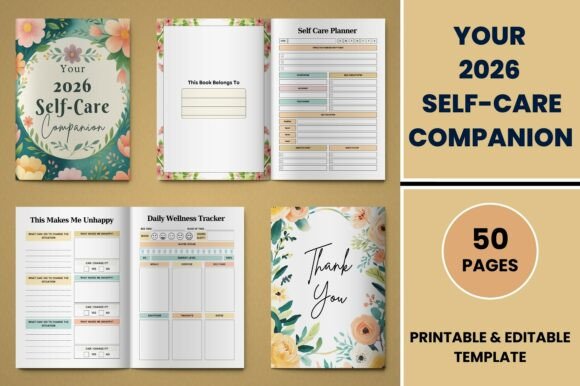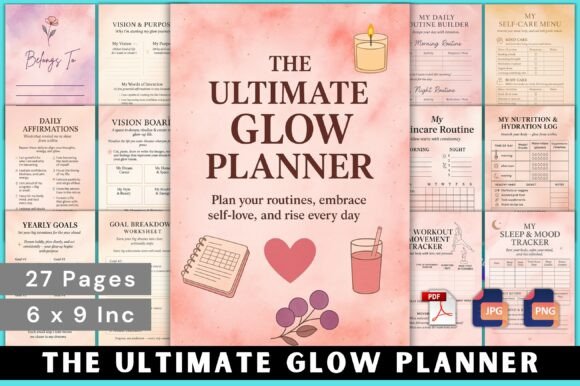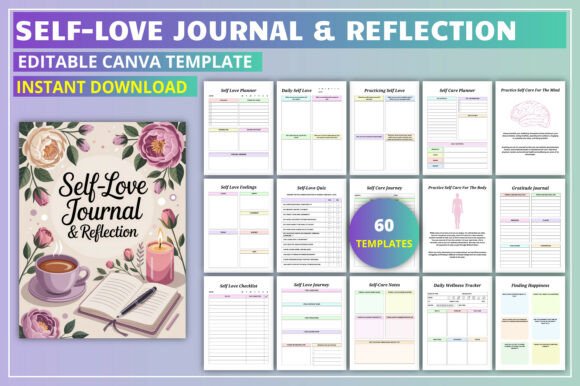
The Inner Compass: A Guided Wellness Self-Care Planner
Wellness isn’t a destination—it’s a daily calibration. For professionals, creators, and decision-makers who operate at high velocity—juggling strategy, communication, team dynamics, and personal sustainability—the real challenge isn’t doing more. It’s discerning what to sustain, what to release, and what to deepen with intention. That’s where The Inner Compass: A Guided Wellness Self-Care Planner becomes more than a journal. It functions as a quiet operational system for inner alignment—one that supports clarity in planning, resilience in execution, and authenticity in positioning.
Why Strategic Clarity Starts With Internal Calibration
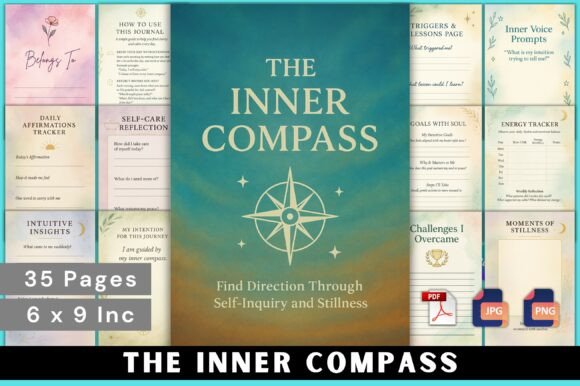
When your calendar is full but your energy is thin, when feedback loops feel noisy and decisions increasingly reactive, the issue often lies upstream: unprocessed emotion, unexamined assumptions, or misaligned values masquerading as “productivity.” The Inner Compass addresses this by embedding reflection into structure—not as an add-on, but as infrastructure. Its 35-page design doesn’t ask you to “find time” for wellness. Instead, it offers tightly scoped prompts and tracking tools calibrated for people who understand that mental bandwidth is finite—and must be governed deliberately.
Consider a freelance educator designing a new course while managing client work and family commitments. Without intentional pauses, she may default to familiar frameworks—even if they no longer serve her current capacity or vision. The Inner Compass invites her to pause not just to rest, but to audit: What energy am I borrowing from? What boundaries have softened without my consent? Where does my teaching mission still resonate—and where has it drifted? These aren’t abstract questions. They’re diagnostic inputs for better strategic choices.
How It Integrates Into Real-World Planning Systems
This planner works best when treated as a companion—not a replacement—for your existing systems. If you use Notion for project tracking, Trello for deadlines, or Google Calendar for time blocking, The Inner Compass complements them by answering questions those tools avoid: Am I choosing this deadline because it serves my goals—or because I’m avoiding discomfort? Is this client relationship energizing my expertise or diluting my voice?
The daily and weekly tracking pages are especially useful for spotting patterns over time—not just mood, but how specific decisions impact focus, creativity, or communication stamina. A small business owner might notice that after three consecutive days of back-to-back Zoom calls (even productive ones), her follow-up emails lack nuance. That’s data—not just anecdote. It informs scheduling policy: Block “synthesis time” after every two hours of live engagement. That’s operational insight rooted in self-awareness.
Using the Prompts With Purpose—Not Habit
The guided wellness prompts in The Inner Compass are intentionally open-ended—but their value multiplies when paired with clear intent. Random journaling yields limited returns. Intentional reflection, anchored to a current priority, creates leverage.
- Before launching a new offer: Use the self-reflection pages to map emotional readiness—not just market readiness. Are you aligned with the message? Or are you pushing forward to meet external expectations?
- During a rebrand: Leverage the mindful living tools to clarify non-negotiables. What core values must remain visible in your visual language, tone, and service boundaries—even as aesthetics evolve?
- After a difficult client conversation: Turn to the emotion-tracking layout not to vent, but to isolate variables: Was the friction about scope? Timing? Unspoken assumptions? That distinction informs whether you adjust your contract, your onboarding script, or your client-fit criteria.
This is how The Inner Compass shifts from “nice to have” to strategically indispensable: it surfaces the subtext behind your actions—so you can edit the narrative before it shapes outcomes.
Risks of Using It Without Context
A planner is only as useful as the awareness brought to it. Using The Inner Compass without anchoring it to a current goal or challenge risks turning reflection into ritual—repetitive, soothing, but ultimately inert. You might diligently fill gratitude prompts while ignoring rising resentment toward a recurring task. Or track habits without questioning whether those habits still serve your definition of success.
Similarly, treating the aesthetic minimalism as purely decorative misses its functional role: reducing cognitive load so attention stays on content—not formatting. If you spend more time customizing fonts than sitting with a single prompt, you’ve inverted the tool’s purpose. The design isn’t meant to be admired. It’s meant to disappear—so your thinking doesn’t get lost in noise.
Practical Integration Tips for Busy Professionals
You don’t need 30 minutes a day. Start smaller—and attach the practice to an existing habit:
- Pair the daily prompt with your morning beverage. Read it while your tea steeps. Answer one sentence—no more. Consistency compounds faster than volume.
- Use the weekly review page during your Sunday planning hour—not as a separate step, but as the first 7 minutes of it. Ask: What decision this week felt most aligned? What felt like friction—and was that friction necessary growth, or misalignment?
- When launching a new initiative, complete the “intention setting” spread before drafting your first email or outline. Name your internal conditions for success—not just deliverables. Example: “I will know this launch is working if I feel curious, not frantic, when checking analytics.”
These micro-uses build fluency. Over time, the prompts stop feeling like questions to answer—and start functioning like reflexes: automatic filters for relevance, resonance, and sustainability.
Long-Term Value: Building Decision-Making Muscle
Over months, The Inner Compass quietly reshapes how you weigh trade-offs. You begin distinguishing between urgency and importance not just intellectually—but viscerally. You notice when “I should” language creeps into your planning—and replace it with “I choose, because…” That shift alone transforms how you position services, communicate boundaries, and allocate creative energy.
For a blogger refining her content strategy, this means pausing before chasing a trending topic to ask: Does this expand my authority—or dilute it? Does it draw from my lived experience, or someone else’s algorithm? For an educator redesigning curriculum, it means evaluating each module not just for learning outcomes—but for emotional safety, cognitive load, and alignment with pedagogical values.
That’s the long-term return: The Inner Compass doesn’t promise peace. It builds the capacity to navigate complexity without losing your center—so your decisions, communications, and creations carry more coherence, credibility, and calm.
Final Consideration: Alignment Is Dynamic, Not Fixed
Your inner compass won’t point north forever—and it shouldn’t. Values evolve. Priorities pivot. Energy ebbs and flows. The strength of The Inner Compass: A Guided Wellness Self-Care Planner lies in its adaptability: a 6 x 9-inch format designed for portability, a printable PDF that lets you iterate (print one week at a time, annotate digitally, revisit past spreads), and prompts flexible enough to hold both quiet mornings and high-stakes transitions.
Use it not to arrive at a final version of yourself—but to stay in intelligent conversation with who you’re becoming. Because in work that matters, the most strategic choice you’ll make today isn’t about output. It’s about orientation.