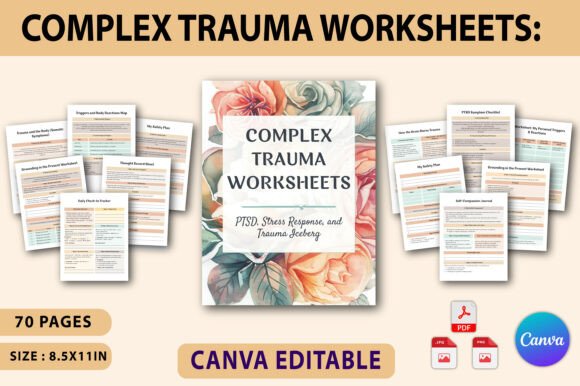
Complex Trauma Worksheets: A Grounded, Modern Tool for Navigating PTSD, Stress, and the Trauma Iceberg
Today’s pace—constant notifications, blurred work-life boundaries, high-stakes decision-making, and social exhaustion—doesn’t just wear us down. For many adults aged 20–50, it also reactivates older wounds. Complex trauma isn’t always dramatic or singular; it often lives quietly in the body as chronic fatigue, emotional numbness, relationship patterns that repeat without explanation, or a persistent sense of being “on guard.” That’s why Complex Trauma Worksheets have moved beyond clinical niches into everyday wellness toolkits—not as a replacement for therapy, but as a consistent, accessible companion for those building resilience on their own terms.
Why “Complex” Matters—and Why Worksheets Are Gaining Traction
Unlike single-incident trauma, complex trauma arises from prolonged, repeated exposure to adverse experiences—especially in childhood or within relationships where safety should be guaranteed. It shapes how the nervous system responds, how emotions are interpreted, and how trust is formed. The “Trauma Iceberg” metaphor helps make this visible: what surfaces—anger, avoidance, burnout—is only the tip. Beneath lie layers of unprocessed memory, somatic imprinting, attachment adaptations, and survival beliefs.
People aren’t suddenly discovering trauma. What’s shifting is how they’re choosing to engage with it: less passively waiting for insight in a session, more actively cultivating awareness between appointments—or when therapy isn’t accessible. Complex Trauma Worksheets meet that need. They offer structure without rigidity, reflection without pressure, and psychoeducation without jargon. Think of them not as homework, but as translation tools—turning internal chaos into observable patterns, and patterns into pathways forward.
From Fight-Flight-Freeze-Fawn to Daily Practice
The stress response model—Fight, Flight, Freeze, and the increasingly recognized Fawn response—is no longer just psychology textbook material. It’s showing up in team retreats, creator burnout guides, and even HR wellness workshops. Why? Because professionals notice how easily “people-pleasing” (Fawn) derails boundary-setting in remote work, or how “freeze” manifests as chronic procrastination during high-pressure launches.
Complex Trauma Worksheets translate this science into daily utility. Instead of memorizing definitions, users map their own responses: When my inbox hits 50 unread messages, do I shut down (Freeze), over-explain (Fawn), rush through tasks (Fight), or scroll mindlessly (Flight)? That self-mapping builds interoceptive awareness—the ability to read your body’s signals before they escalate. And because the worksheets include somatic awareness exercises (gentle breath cues, posture checks, grounding anchors), they bridge the gap between cognitive understanding and embodied regulation.
A Realistic Example: The Freelancer’s Cycle
Consider a freelance designer who consistently takes on too much, cancels plans last-minute when overwhelmed, and feels inexplicably exhausted after client calls—even positive ones. Without context, this looks like poor time management. With the Complex Trauma Worksheets, she might recognize her “Fawn” pattern: saying yes to avoid conflict or rejection, then collapsing afterward. The Safety Grounding Plan section helps her draft a 90-second pre-call ritual—feet on floor, hand on heart, one breath—creating micro-moments of choice instead of automatic reaction. It’s not about fixing everything at once. It’s about interrupting one loop, consistently.
How Modern Workflows Are Reshaping Trauma-Informed Tools
Digital-native creators, solopreneurs, and hybrid workers rarely follow linear healing timelines. They toggle between Zoom calls and caregiving, manage anxiety while drafting a pitch, and seek tools that fit into 15-minute windows—not hour-long journaling marathons. That’s why the design of Complex Trauma Worksheets reflects contemporary needs: minimalist layouts reduce cognitive load; printable + digital-friendly formats accommodate tablet note-taking or PDF annotation; and daily trackers ask only for what’s sustainable—mood (1–5 scale), one grounding moment, one small act of care.
This isn’t simplification—it’s respect. Trauma recovery isn’t about productivity. But for people whose livelihoods depend on sustained focus and relational presence, tools that honor energy limits *are* practical. The weekly mood + self-care tracker, for instance, doesn’t demand analysis—just noticing. Over time, patterns emerge: lower energy every Thursday? Maybe it’s not “just stress”—it’s the somatic echo of a recurring meeting that triggers old power dynamics. Awareness precedes change.
Faith-Friendly Prompts and Inclusive Design
Wellness spaces often default to secular mindfulness or clinical language—leaving out those for whom spirituality is part of their resilience framework. The Complex Trauma Worksheets include gentle, non-dogmatic prompts (“What feels sacred in this moment?” “Where do you feel held?”) that resonate across traditions—or none at all. This isn’t about doctrine; it’s about honoring how meaning-making supports healing. For educators developing SEL curricula, coaches supporting diverse clients, or faith-based community leaders, this flexibility makes the resource usable without adaptation.
Therapy Companion—Not Therapy Replacement
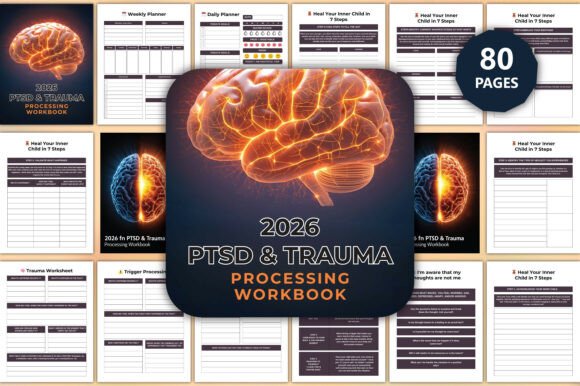
Therapists report increasing requests for “homework that doesn’t feel like homework.” Clients want continuity between sessions—not vague suggestions like “practice grounding,” but concrete, low-barrier ways to apply skills. The Complex Trauma Worksheets serve that role: therapists can assign specific pages (e.g., “Bring back your completed Trigger Tracker next week”) and use responses to guide deeper exploration. For self-guided users, the structure prevents overwhelm—each section builds on the last, gently scaffolding understanding from “What happened?” to “How does it live in me now?” to “What helps me feel resourced?”
What Hasn’t Changed—And Why That’s Important
Trends come and go—biohacking, dopamine fasting, viral mental health challenges—but the core needs remain steady: safety, agency, coherence, and connection. Complex Trauma Worksheets don’t chase novelty. They return again and again to evidence-informed foundations: polyvagal theory, attachment science, somatic experiencing principles, and narrative therapy techniques—all distilled into calm, actionable pages.
That consistency matters. In a landscape saturated with quick-fix apps and oversimplified self-help, these worksheets offer something quieter but more durable: permission to move slowly, to revisit the same prompt twice, to skip a section and return later. Healing isn’t optimized. It’s witnessed. And sometimes, the most radical act is filling out a simple grounding plan—not to “fix” yourself, but to say, I’m here. I’m tending to this.
Getting Started—Without Pressure
You don’t need to begin at page one. You don’t need to complete every worksheet. Start where your nervous system allows: maybe with the “Safety Grounding Plan” if overwhelm feels frequent; the “PTSD Self-Assessment” if you’re unsure whether your reactions align with trauma responses; or the “Somatic Awareness” section if your body feels disconnected or unpredictable. Use a pen, voice notes, or digital highlights—whatever lowers the barrier to entry.
For creators and educators: consider integrating one worksheet into a workshop or newsletter—like pairing the “Stress Response Inventory” with a discussion on workplace communication styles. For therapists: assign the “Emotional Regulation Flowchart” as a take-home reference for clients navigating intense moments between sessions. For anyone reading this mid-scroll, mid-sigh, mid-crisis: this isn’t about adding another task. It’s about reclaiming a sliver of space where your experience is valid, understandable, and worthy of gentle attention.
Healing from complex trauma isn’t about erasing the past. It’s about expanding your capacity to hold it—with clarity, compassion, and quiet consistency. That expansion begins not with grand gestures, but with the soft, deliberate act of turning the page.