Etsy Shop Launch Planner
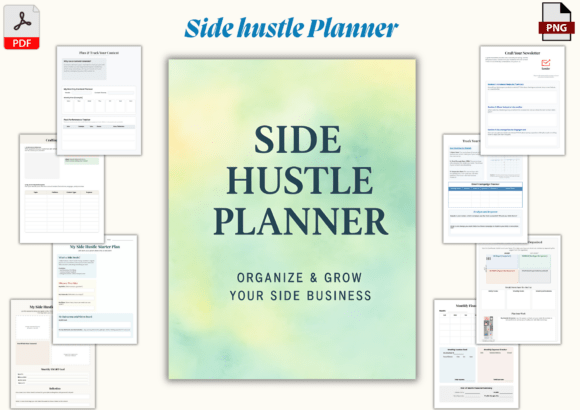
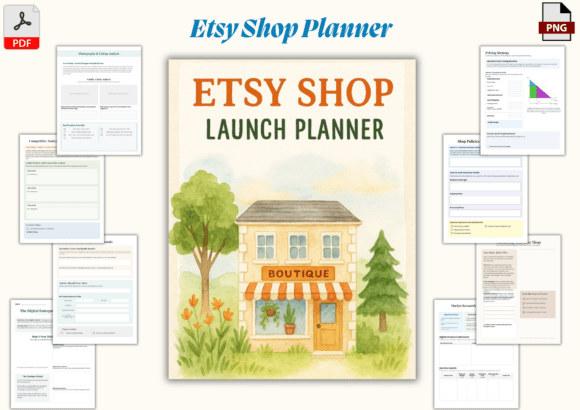
Starting an Etsy shop isn’t just about listing your first item—it’s about building a foundation that supports growth, clarity, and sustainability. The Etsy Shop Launch Planner is a purpose-built 26-page interactive guide designed for real-world use: not theory, not inspiration alone, but actionable structure. Measuring 8.5 x 11 inches and delivered as both PDF and high-resolution PNG files, it’s built to be printed, written on, highlighted, and revisited—not tucked away after launch day.
What It Is—And What It Isn’t
This isn’t a generic business planner repurposed for Etsy. Every page reflects platform-specific realities: how Etsy’s search algorithm responds to tags and titles, why policy wording affects buyer trust, how digital product sellers need different fulfillment workflows than ceramicists shipping mugs, and why profit calculations must account for Etsy’s layered fees (listing, transaction, payment processing, optional ads). The planner includes guided prompts—not vague questions—but targeted reflections like “Which three keywords describe what your ideal buyer searches *before* they know your shop exists?” or “What’s the smallest version of your best-selling item you could list in under 45 minutes?”
Why It Resonates Across Different Goals
A college student launching a side hustle from their dorm room cares about speed and low risk. A seasoned graphic designer shifting from client work to selling printables needs clarity on licensing, file delivery, and scaling without inventory. A retired teacher turning quilting into income values simplicity, legible layouts, and space to jot notes without digital distraction. Each person interacts with the Etsy Shop Launch Planner differently—not because it’s flexible in a vague way, but because its structure invites personal pacing.
For Beginners: Confidence Through Sequence
If you’ve never uploaded a photo to Etsy, the planner’s step-by-step launch framework removes ambiguity. Page 3 doesn’t ask “What’s your brand voice?”—it walks you through listening to three current Etsy shops in your niche, noting word choices, color palettes, and tone—and then guides you to draft two versions of your own shop announcement. Worksheets include pre-filled examples (e.g., “$24.99 = $12 materials + $5 labor + $4.50 Etsy fees + $3.49 profit”) so pricing feels grounded, not guesswork. No jargon. No assumed knowledge. Just progression.
For Creators Selling Digital Products
Digital sellers often overlook how much customer service hinges on clarity—not just in policies, but in how files are named, organized, and delivered. The planner includes a dedicated workflow sheet for digital launches: one column for “what the buyer sees” (e.g., “instant download link in email”), another for “what you do behind the scenes” (e.g., “auto-respond with Canva template + PDF checklist”). There’s also a versioning tracker—critical when updating templates or fonts across multiple listings—so you don’t accidentally send outdated files.
For Small Business Owners Scaling Beyond Etsy
The financial trackers go deeper than revenue vs. cost. They separate platform-specific expenses (Etsy Ads spend, offsite ads commission) from operational ones (label printer ink, cloud storage subscriptions), helping identify where to reinvest as volume grows. A “profit per hour” calculator encourages reflection beyond gross sales—especially useful if you’re weighing whether to hire help or outsource photography. And the marketing worksheet asks not “What platforms should you use?” but “Which two channels let you engage meaningfully *without* creating new content daily?”—a subtle but vital distinction for time-strapped owners.
For Educators and Mentors
Art teachers, craft workshop leaders, and small-business advisors use the planner as a shared language. Its clean, uncluttered layout makes it easy to photocopy individual pages—like the branding identity worksheet—for classroom use. The case studies aren’t fictional success stories; they’re anonymized snapshots from real sellers (e.g., “A watercolor illustrator increased repeat buyers by 40% after refining her ‘About’ section using the shop story prompt on page 12”). That specificity builds credibility—and gives educators concrete examples to unpack with students.
Practical Priorities—And How This Planner Meets Them
Ease of use matters most to someone launching between shifts or after bedtime. The planner avoids complex spreadsheets or software dependencies—everything works with pen, highlighter, or free PDF annotation tools.
Quality shows up in subtle ways: consistent spacing for handwriting, margins wide enough for binding, grayscale-friendly design (no reliance on color to convey meaning), and font sizing that remains legible when printed on older office printers.
Flexibility isn’t about blank pages—it’s about intentional whitespace. The “Marketing Experiment Log” doesn’t prescribe tactics; it asks for your hypothesis, timeline, metric, and observation. You decide whether to test Instagram Reels, Pinterest SEO, or a limited-time bundle—and record what actually moved the needle.
Long-term usefulness comes from structure that evolves with you. The “Shop Health Check-In” (page 24) isn’t a one-time task. It’s designed to be revisited quarterly—with prompts like “Which listing surprised you by performing well? What can you replicate?” or “Where did you spend time this month that didn’t convert to sales—or joy?”
Does It Fit Your Next Step?
Ask yourself:
- If your biggest barrier right now is uncertainty about *where to start*, this planner replaces overwhelm with sequence.
- If you’ve launched before but stalled at 10–15 listings, its growth maps help diagnose bottlenecks—not just “post more,” but “which part of your listing workflow slows you down most?”
- If you teach others or support creative entrepreneurs, its clarity and real-world grounding make it a reliable companion—not just for your own shop, but for guiding others.
- If you prefer digital tools but want tactile planning, the interactive PDF allows typing, checking boxes, and saving progress—while the PNGs give flexibility for designers who want to layer over the layout in Canva or Illustrator.
It won’t write your product descriptions. It won’t take your photos. But it does something quieter and more lasting: it holds space for your thinking, surfaces assumptions before they become problems, and turns broad intentions—“I want to grow my shop”—into tangible, trackable actions. Whether you’re listing your first printable tomorrow or rethinking your second-year strategy, the Etsy Shop Launch Planner meets you where you are—not where a generic guide assumes you should be.