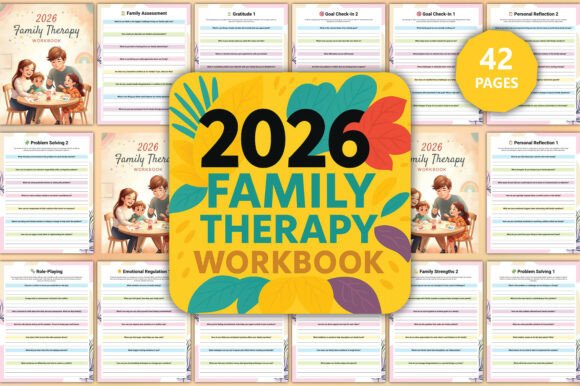
2026 Family Therapy Workbook
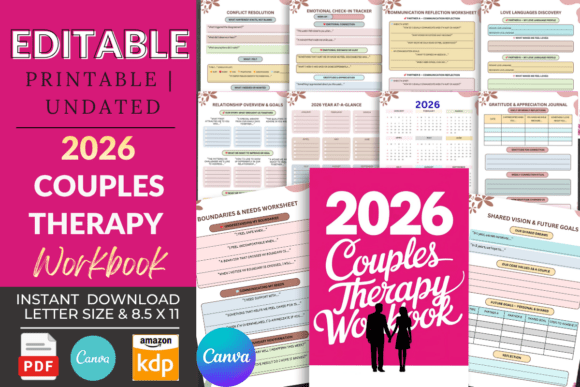
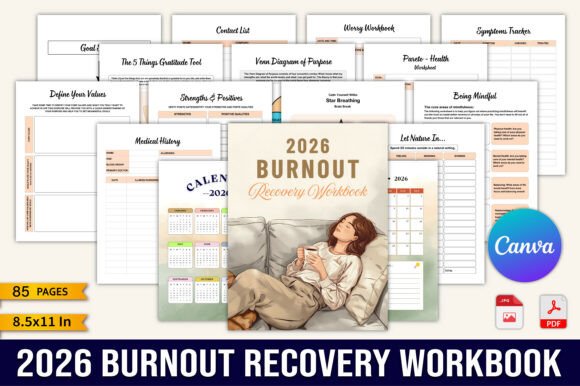
The 2026 Family Therapy Workbook is a guided journal designed to support families in building stronger communication, navigating conflict constructively, and deepening emotional connection over the course of a year. It is not a clinical treatment tool, nor does it replace licensed therapy—but rather functions as a structured, accessible companion for families already engaged in therapeutic work or those seeking intentional, low-pressure ways to grow together. Its format combines calendar planning, reflective writing, collaborative activities, and mindfulness-based prompts—all presented in an illustrated, visually inviting layout.
Who Might Consider This Workbook?
Families may explore the 2026 Family Therapy Workbook for several practical reasons. Some are actively working with a family therapist and want consistent, at-home reinforcement between sessions. Others are looking for a shared activity to reduce screen time and increase meaningful interaction—especially during transitional periods like returning from summer break, adjusting to new school routines, or navigating blended family dynamics. Parents of children aged 8–16 often find the prompts adaptable across developmental stages, though younger children will need adult support to engage fully. Adults in multigenerational households—or those co-parenting across distances—may also use it to maintain continuity and shared intentionality.
Key Benefits and Realistic Expectations
One strength of the 2026 Family Therapy Workbook lies in its scaffolding: it offers clear structure without rigid prescription. The 2026 calendar overview helps families anchor reflection and action in real time—scheduling check-ins, noting milestones, or marking moments of progress. Family assessment pages invite honest but nonjudgmental self-reflection on current dynamics, while goal-setting worksheets encourage specificity (e.g., “We will take turns speaking without interruption during dinner three times this week”) rather than vague intentions.
The inclusion of role-playing games and lighthearted prompts—like “Two Truths and a Lie” or “What makes you feel safe at home?”—lowers emotional barriers to engagement. These elements can ease tension when direct conversation feels difficult. Similarly, emotional regulation sections introduce breathing awareness and grounding techniques in accessible language, supporting skill-building without requiring prior training.
However, expectations matter. This workbook does not provide clinical diagnosis, crisis intervention, or trauma-informed protocols. Families managing acute mental health concerns, active substance use, high-conflict separation, or abuse should prioritize professional support first. The workbook complements care—it doesn’t substitute for it. Progress is also nonlinear; some weeks may yield rich discussion, others minimal participation. Consistency matters more than perfection, and flexibility in how—and how often—the workbook is used tends to support longer-term engagement.
When It’s a Strong Fit
The 2026 Family Therapy Workbook aligns well with families who value routine, visual organization, and gentle accountability. It suits those comfortable with writing, drawing, or collaborative reflection—even if only one or two members initiate the process. Homes where adults model curiosity over correction (“What did that feel like for you?” vs. “You shouldn’t have said that”) will likely find the prompts more naturally resonant.
It also fits families seeking prevention-oriented tools—not just response to existing challenges. For example, parents preparing for a child’s transition to middle school might use the future-planning sections to collaboratively envision support needs, roles, and boundaries ahead of time. Blended families building new traditions may benefit from the “Getting to Know Each Other” prompts to uncover shared values before assumptions harden.
When Alternatives May Be More Appropriate
This workbook assumes baseline safety, mutual willingness to participate, and functional literacy in the primary language of use. Families where participation is coerced, where power imbalances prevent open expression, or where language access is limited may find its written format less effective. In such cases, alternatives like art-based family sessions with a trained clinician, audio-guided mindfulness practices, or community-led parenting circles may offer more accessible entry points.
For families needing immediate behavioral strategies—such as de-escalation techniques for aggression or concrete tools for ADHD-related executive function challenges—a specialized, evidence-based program (e.g., Collaborative & Proactive Solutions or The Incredible Years) may deliver more targeted support. Likewise, digital tools with built-in reminders, progress tracking, or therapist feedback loops could better suit tech-engaged users who struggle with paper-based consistency.
Making a Practical Decision
Before choosing the 2026 Family Therapy Workbook, consider three questions:
- What is your current capacity? Does your household have 10–20 minutes weekly for shared reflection? If not, starting smaller—perhaps one prompt every other week—may be more sustainable than abandoning the effort entirely.
- What outcomes do you hope to see? If improved listening, increased appreciation, or more predictable routines are goals, the workbook’s gratitude commitments, communication exercises, and calendar integration align well. If the aim is rapid behavior change or resolution of entrenched patterns, professional guidance remains essential.
- How do family members respond to structure? Some thrive with scheduled prompts and checklists; others disengage under perceived pressure. Previewing a few sample pages—or testing one activity as a trial—can clarify fit without long-term commitment.
It’s also worth noting that while the workbook is dated for 2026, its core content is evergreen. Users can adapt the calendar sections for any year, and many prompts—on identity, belonging, emotion naming, and shared values—remain relevant across time. The dated design does, however, reinforce timely reflection: reviewing a full year of small shifts can reveal patterns no single session would show.
Final Considerations
The 2026 Family Therapy Workbook occupies a thoughtful middle ground: more intentional than casual conversation, less intensive than formal therapy. Its illustrations and color-coding support accessibility, especially for neurodivergent learners or those with attention-related preferences. Yet its effectiveness depends less on design and more on how it’s integrated—gently, patiently, and with room for revision.
Like any relational tool, it works best when paired with presence: putting devices away, honoring silence, and responding with curiosity instead of correction. No workbook guarantees transformation—but for families willing to show up, even imperfectly, it offers a grounded, organized way to practice what matters most: seeing each other, listening deeply, and growing together, one page at a time.